You spot it on the rack from three feet away: a soft oatmeal cashmere crewneck with a hand-written tag that says “$28.” Your pulse does the little thrift-store flutter. Then you get closer. The underarms are a constellation of pills. There’s a small irregular hole near the hem that could be a moth snack or could be “distressing.” And the tag says “100% Cashmere” but the sweater feels suspiciously like a cotton blend that’s been conditioned to behave.
You buy it anyway. You always buy it anyway. And three weeks later it’s in the repair pile with the other mistakes.
The problem isn’t that good secondhand cashmere doesn’t exist. It’s that the good pieces are sitting right next to the bad ones, often at similar prices, and most of us don’t have a system for telling them apart in the ninety seconds we’re willing to stand in an aisle. This checklist is that system. Five questions, asked in order, before anything goes in your basket.
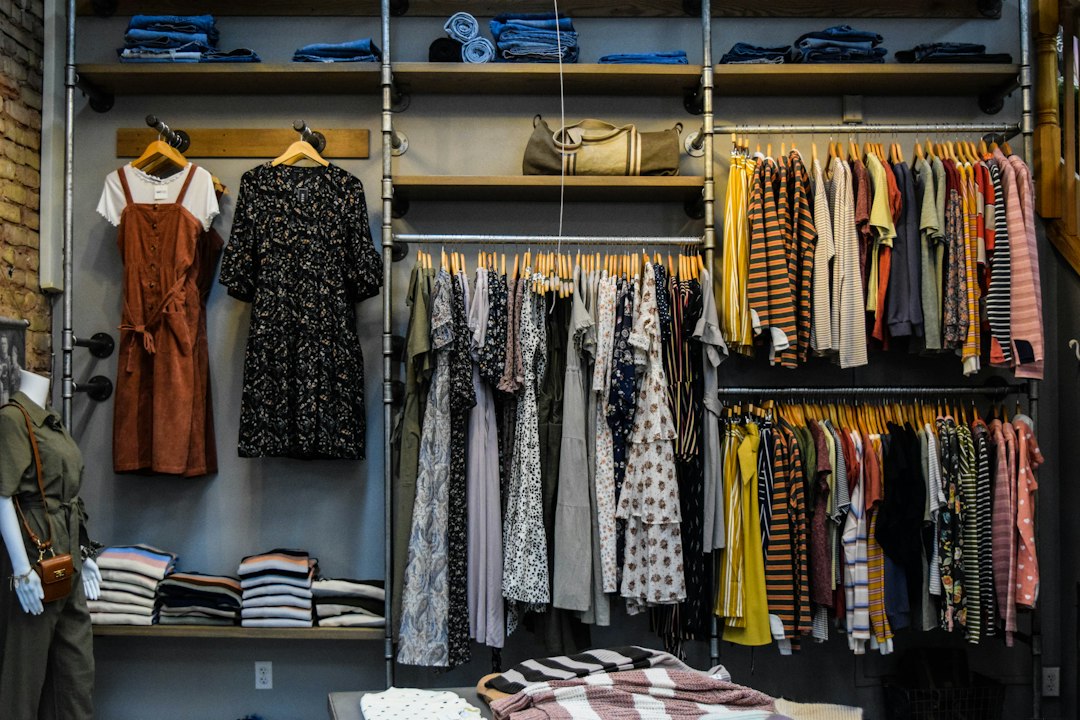 Photo by Burgess Milner on Unsplash
Question 1: What Is This Sweater Actually Made Of?
Before you look at condition, before you look at price, look at the fiber content tag. This is the single fastest filter, and it eliminates about half the questionable pieces on any given rack.
Read the tag like a skeptic
“100% cashmere” is the only label that means what you think it means. Everything else is a negotiation:
- “95% cashmere, 5% nylon” — Common in contemporary sweaters. The nylon adds durability and helps the garment hold shape, but it also slightly reduces the softness and the way the sweater breathes. Not a dealbreaker, but adjust your price expectations downward.
- “70% cashmere, 30% wool” — Fine if the price reflects it. You’re getting warmth and durability, less of the cloud-like hand-feel.
- “Cashmere blend” with no percentages — Walk away. This usually means 10-20% cashmere and 80% acrylic, and acrylic pills aggressively and holds onto odors.
- “Cashmere-touch,” “cashmere-like,” “cashmere feel” — These are marketing phrases with no legal definition. They mean synthetic. Full stop.
If there’s no fiber tag at all, do the pinch test: rub a small section of the fabric between your thumb and forefinger. Real cashmere warms almost immediately from your body heat. Acrylic stays cool and slightly slick. Wool feels coarser and has a faint lanolin scent when warmed.
The two-ply question
Here’s a detail most shoppers miss: check whether the yarn is two-ply or single-ply. Hold the sweater up to a light and look at the knit structure. Two-ply cashmere — where two strands of yarn are twisted together before knitting — is significantly more durable and resists pilling far better than single-ply. Single-ply sweaters feel luxurious in the store and look exhausted after a season.
You can usually tell by feel: two-ply has a slight springiness and weight. Single-ply feels almost weightless and slightly limp. If you’re paying more than $60 for a secondhand sweater, two-ply should be your baseline.
A note on “grade”
You’ll see sellers online claim “Grade A” or “Grade AAA” cashmere. This grading system isn’t officially regulated in the way most shoppers assume, and it’s used loosely by resellers. What actually matters is fiber length (longer fibers = less pilling) and ply. Ignore the grade claims. Check the ply and the hand-feel instead.
If you want a deeper dive into how to keep whatever you buy in good condition, our cashmere care checklist for washing, de-pilling, and storing secondhand sweaters covers the maintenance side thoroughly.
Question 2: Where Is the Damage — and Is It Fixable?
Every secondhand sweater has a story, and some of those stories involve moths. The trick isn’t finding a flawless piece (rare, and priced accordingly). It’s distinguishing damage you can repair from damage that will spread or can’t be hidden.
The three-zone inspection
Zone 1: Underarms and side seams. This is where pilling shows up first, because it’s where friction happens. Light pilling here is normal and removable with a fabric shaver or cashmere comb. Heavy pilling that’s already matted the fabric into hard little knots means the fibers are breaking down. Pass.
Zone 2: The back and shoulders. Hold the sweater up to a window or overhead light. Moth damage often shows up here as small, irregular holes or as thin, translucent patches where larvae have eaten through the fiber. A single small hole near a seam can often be rewoven or darned invisibly. Multiple holes scattered across the back panel usually mean the piece has been stored poorly for years — and there may be more damage you can’t see yet.
Zone 3: Cuffs, hem, and collar. These are the structural edges. Stretched-out cuffs that don’t snap back, a collar that’s lost its shape, or a hem that’s visibly wavy usually can’t be fixed without visible reconstruction. Some people don’t mind a relaxed cuff. But if you want a sweater that reads polished, this is where “loved” tips into “worn out.”
The stretch-and-release test
Gently stretch a section of the knit sideways, then let go. Good cashmere snaps back to its original shape almost immediately. If it stays stretched, the elastic memory of the fiber is gone. This is irreversible.
What’s worth repairing vs. what isn’t
| Damage type | Fixable? | Worth it if… |
|---|---|---|
| Light surface pilling | Yes, easily | Always — this is normal wear |
| Single small hole (under 1 cm) | Yes, with darning or reweaving | The rest of the sweater is sound |
| Multiple moth holes | Sometimes | You love it and have a good tailor |
| Stretched cuffs or collar | Rarely invisible | You accept a relaxed fit |
| Matted, felted pilling | No | Never — fibers are destroyed |
| Faded color across the whole garment | No | You want an intentionally faded look |
If you’re buying a piece with a small repair need, budget for it. A good reweaving job runs $25-60 depending on your market, which changes the math on whether that $28 sweater is actually a $70 sweater. For a broader look at how to approach repairs on secondhand wool pieces, our repair-first playbook for secondhand wool coats walks through similar decision-making for heavier garments.
Question 3: Does the Price Match the Actual Value?
Secondhand cashmere pricing has gotten strange. A decade ago, a thrift-store cashmere sweater was $8-15. Now, depending on the market, you’ll see them tagged anywhere from $15 to $180, and the number on the tag often has nothing to do with the quality of the piece.
The value tiers
Here’s a rough framework for what a secondhand cashmere sweater is actually worth, based on condition and construction:
- $10-25: Single-ply, some pilling, minor wear. Fine for a beater sweater you’ll wear on cold mornings. Expect to replace it within a few seasons.
- $25-60: Two-ply, light pilling, sound structure. This is the sweet spot for most shoppers. A well-chosen sweater here can last a decade.
- $60-120: Two-ply, excellent condition, possibly a known heritage brand (Loro Piana, Brunello Cucinelli, Johnstons of Elgin, Brora). Worth it if the condition genuinely matches.
- $120+: Only justified for rare vintage, deadstock, or a piece with documented provenance. At this price, you’re often paying for the label, not the fiber.
The brand filter
Some brands are worth paying a premium for secondhand because their cashmere is genuinely better-constructed: Johnstons of Elgin, Brora, Loro Piana, Brunello Cucinelli, Eric Bompard, and vintage Pringle of Scotland. Mid-tier brands like Everlane, Quince, and Naadam make decent cashmere at accessible prices, but their secondhand value should reflect that — you shouldn’t pay near-retail for a used Quince sweater.
Fast-fashion cashmere (and yes, it exists) is rarely worth buying secondhand at any price, because the fiber quality is already compromised and it will pill within weeks.
The hidden cost calculation
Factor in:
- Dry cleaning if the sweater smells like storage: $12-20
- De-pilling if you don’t own a shaver: $15-25 for a good one (worth owning)
- Repairs if there are holes: $25-60
- Your time if you’re going to hand-wash and block it
A $40 sweater that needs $30 of intervention is a $70 sweater. Sometimes that’s still a good deal. Sometimes it isn’t. Do the math before you fall in love.
 Photo by Korie Cull on Unsplash
Question 4: Can You Verify the Seller or the Source?
Where you’re shopping changes what you can verify, and that changes how much risk you’re taking on.
In-person thrift and consignment
You can touch, stretch, smell, and inspect in person. This is the lowest-risk channel. You can also often negotiate, especially at consignment shops that have had a piece on the rack for a while.
Online resale (Poshmark, Depop, eBay, The RealReal)
You’re relying on photos and descriptions. Before buying:
- Ask for a close-up of the fiber tag and the care tag.
- Ask for measurements (pit-to-pit, length, sleeve length) — cashmere shrinks and stretches, so labeled sizes are unreliable.
- Ask directly: “Are there any holes, pilling, or repairs?” Sellers who hesitate or give vague answers are telling you something.
- Check the return policy. If returns aren’t accepted, you’re taking on all the risk.
Estate sales and vintage shops
These can be goldmines for older, higher-quality cashmere — pieces made before fast-fashion diluted the fiber supply. Look for country-of-origin tags (Scotland, Italy, and Mongolia are strong signals) and older brand labels.
The smell test (literally)
If you’re shopping in person, smell the sweater. Musty, mildewy, or chemically smells are hard to remove and often indicate long-term poor storage. A faint cedar or lavender scent is fine — that’s a sign someone cared for it. Cigarette smoke is nearly impossible to fully remove from cashmere. Pass.
Question 5: Will You Actually Wear It — and Can You Care for It?
This is the question that saves you from the most common secondhand mistake: buying something beautiful that doesn’t fit your actual life.
The three-outfit test
Before you buy, mentally style the sweater with three outfits you already own. If you can’t get to three without inventing new pieces you’d need to buy, the sweater is a project, not a purchase. This is the same logic that makes a five-outfit layering system from secondhand pieces work — every piece has to earn its place by multiplying what you already have.
The care commitment
Cashmere is not a low-maintenance fiber. It needs:
- Hand-washing in cool water with a gentle detergent (or a mesh bag on a delicate cycle)
- Flat drying, never hanging
- Regular de-pilling during the season
- Storage folded, not hung, in a breathable bag with cedar or lavender during the off-season
If you know you won’t do this, buy a cheaper sweater you can afford to replace. There’s no shame in that — it’s just honest math about your habits.
Fit details that matter
- Shoulders: The seam should sit at the edge of your natural shoulder, not droop past it.
- Sleeves: Cuffs should hit at the wrist bone, not the knuckle.
- Length: A crewneck or v-neck should hit at the high hip. Anything longer risks looking like a tunic.
- Ease: Cashmere relaxes slightly with wear, so buy a fit that’s slightly snug rather than slightly loose.
The Shortlist Criteria That Matter
If you want the whole checklist compressed into something you can screenshot and carry into a store, here it is:
- Fiber tag says 100% cashmere (or a blend you’re knowingly accepting at a lower price).
- Two-ply construction, confirmed by feel and weight.
- No matted pilling, no more than one small repairable hole, no stretched cuffs or collar.
- Price matches condition tier — $25-60 for a solid two-ply piece is the sweet spot.
- Seller is verifiable (in-person, or online with a clear return policy and responsive answers).
- You can name three outfits you’d wear it with, using pieces you already own.
- You’re willing to hand-wash and store it properly for the life of the garment.
If a sweater passes all seven, buy it. If it fails two or more, leave it — there will be another one. Cashmere is not rare; good cashmere is just selectively common, and now you know how to find it.
Once you’ve got your sweater home, the next step is making sure it stays in the condition you bought it in. Start with a proper wash and block, then set up a storage routine that keeps moths out and shape in. The full care playbook for secondhand cashmere walks through every step, from the first wash to off-season storage. Do that once, and the sweater you rescued from the rack will outlast most of what’s on the new-arrivals floor.