You spot the hole on a Tuesday morning, just as you’re reaching for your favorite cream-colored cashmere crewneck. It’s small—smaller than a pencil eraser—tucked near the left side seam. You tell yourself it’s nothing. You wear the sweater anyway. By Friday, the hole has doubled in size, and there’s a second one forming near the collar.
This is the mistake most readers make: they wait.
By the time you notice a moth hole, a snag, or a thin spot, the damage is already active. Wool is a living fiber—it breathes, it pills, it weakens under friction. But it also responds beautifully to intervention. The difference between a sweater that ends up in a landfill and one that lasts another decade is not skill. It is timing.
Welcome to the care playbook for wool sweaters. We’ll cover prevention, repair techniques for holes and pilling, and the one scenario where replacement is actually the right call. If you’ve ever stood in front of a beloved sweater wondering if it’s time to let go, this guide is your second opinion.
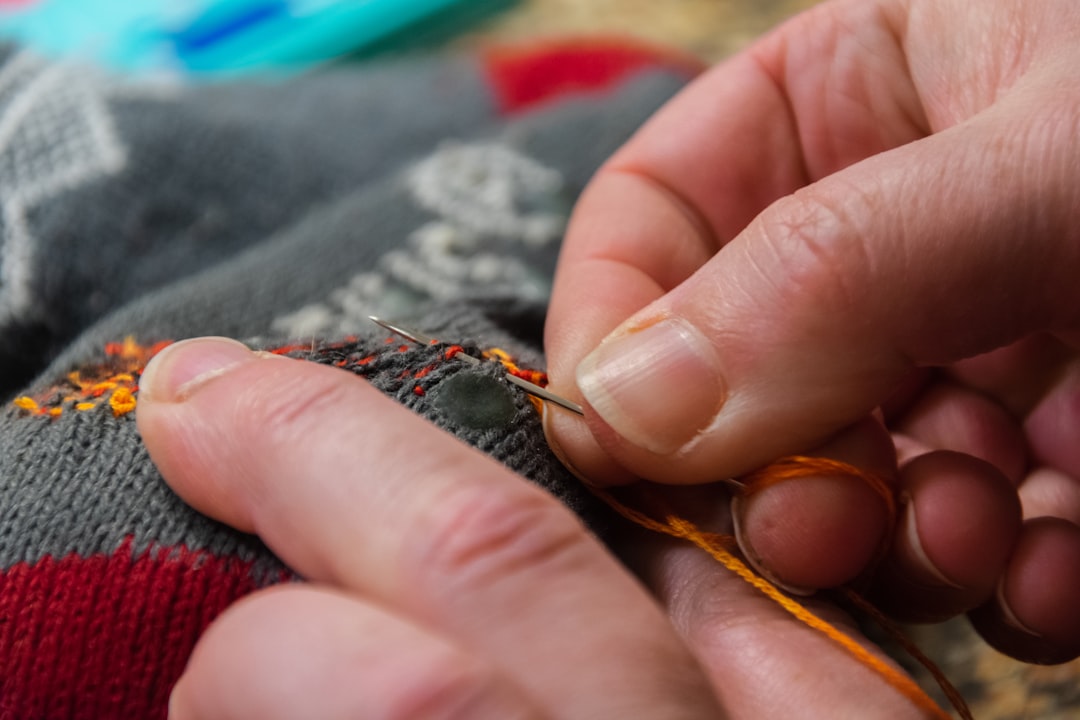 Photo by Joseph Sharp on Unsplash
Why Wool Needs a Different Kind of Care
Most of us treat wool like cotton. We toss it in the washing machine, hang it to dry, and expect it to hold up. But wool is a protein fiber, structurally different from plant-based cotton or linen. Its scales interlock when agitated by heat and motion, causing shrinkage and felting. It also absorbs moisture without feeling wet, which makes it a breeding ground for moths if stored improperly.
The good news is that wool is one of the most forgiving fibers to repair. A well-darned hole in a wool sweater can become nearly invisible, and the repair itself strengthens the surrounding fabric. Compare that to a synthetic knit, where a hole often unravels irreparably because the fibers are fused rather than woven.
Understanding this distinction changes how you approach care. Wool is not fragile—it is responsive. Treat it with intention, and it will reward you with years of wear.
The Three Enemies of Wool
- Moths – Specifically, the larvae of the common clothes moth (Tineola bisselliella). They eat keratin, the protein in wool, and prefer dark, undisturbed spaces.
- Friction – Underarm seams, elbows, and areas where a bag strap rests are prone to thinning and pilling.
- Improper washing – Heat, agitation, and harsh detergents break down wool’s natural lanolin, leaving fibers brittle and prone to breakage.
Each enemy requires a different response. Let’s start with prevention, because a hole you never have to fix is the best kind of repair.
The Prevention Protocol: Storage, Cleaning, and the Freeze Trick
Storage That Actually Works
Moths are not attracted to clean wool. They are attracted to sweat, skin cells, and food residue. Before storing your sweaters for the season, wash them (more on that below) and ensure they are completely dry.
Use breathable cotton garment bags or cedar chests. Avoid plastic dry-cleaning bags—they trap moisture and create the humid environment moths love. Cedar blocks and lavender sachets are effective repellents, but they lose potency over time. Refresh cedar by sanding the surface lightly every six months.
If you live in an area with a known moth problem (and if you own wool, you likely do), consider a preventative freeze treatment twice a year. Place your sweaters in a deep freezer for 72 hours, remove them for 72 hours, then return them to the freezer for another 72 hours. This freeze-thaw-freeze cycle kills both adult moths and eggs at all life stages. It is the single most effective non-chemical prevention method available.
Washing Wool Without Ruining It
The number one cause of premature wool failure is machine washing on the wrong cycle. Here is the rule: cold water, gentle detergent, no agitation.
Hand washing is ideal, but a machine with a dedicated wool or hand-wash cycle works if you use a mesh laundry bag. Turn the sweater inside out, submerge it in cool water with a small amount of wool-specific detergent (look for formulas free of enzymes and bleach), and let it soak for 15 minutes. Do not rub or wring. Rinse with cool water, then press the water out by rolling the sweater in a clean towel.
Dry flat on a mesh rack away from direct heat and sunlight. Never hang a wet wool sweater—gravity will stretch it out of shape.
For a deeper dive into caring for delicate natural fibers, see our silk care playbook. Many of the same principles apply.
How to Repair Moth Holes Like a Pro
You’ve found a hole. Now what?
First, assess the damage. Small to medium holes (up to about the size of a quarter) are repairable at home. Larger holes, or areas where the fabric has completely disintegrated, may require a professional reweaver or a visible mending approach.
You will need:
- A darning needle (blunt tip, large eye)
- Matching wool or embroidery thread (100% wool is ideal because it felts into the surrounding fabric)
- A darning mushroom or a small, smooth, round object (a lightbulb or a wooden spoon works)
- Small, sharp scissors
Step-by-Step Darning for Moth Holes
-
Prepare the hole. Trim any loose or frayed threads around the edges. Do not cut into the surrounding fabric—only remove what is completely detached.
-
Secure the area. Place the darning mushroom (or substitute) under the hole. This creates tension and prevents the fabric from puckering. The goal is to fill the gap, not to pull the surrounding stitches tight.
-
Start the vertical stitches. Thread your needle with a single strand of wool thread about 18 inches long. Starting about half an inch above the hole, weave the needle in and out of the fabric in straight vertical lines. Each stitch should extend about half an inch beyond the hole on both sides. Keep the stitches close together—about the width of a knitting needle apart. This creates a “bridge” across the hole.
-
Weave the horizontal stitches. Once the vertical bridge is complete, turn your work 90 degrees. Weave the needle over and under the vertical threads, alternating each row. This creates a woven patch that mimics the original knit structure.
-
Finish and blend. Gently tug the edges of the repair to distribute the tension. If you used wool thread, lightly steam the area (hold a steamer a few inches away) to encourage the fibers to felt together. Trim any excess thread.
The result should be a patch that is slightly thicker than the surrounding fabric but that blends in color and texture. With practice, the repair becomes nearly invisible.
When to Use Visible Mending
Visible mending—using a contrasting thread or a decorative stitch—is not a compromise. It is a deliberate design choice. If the hole is in a prominent spot or if you want to celebrate the repair, try a Swiss darning stitch (also called duplicate stitch) in a complementary color. This technique follows the original knit pattern and looks intentional rather than patched.
For a more detailed visual walkthrough, the sustainable fashion community on Reddit often shares before-and-after photos of visible mending projects that can inspire your own approach.
The Pilling Problem: Prevention and Removal
Pilling is not damage—it is a surface phenomenon. Short fibers that break loose from the yarn tangle into small balls. It happens most on areas of friction: under the arms, along the sides, and on the cuffs.
The instinct is to pick at pills. Do not. Pulling can yank the fiber out of the knit, creating a weak spot that eventually becomes a hole.
How to Remove Pills Safely
- Fabric comb: A fine-tooth fabric comb lifts pills without cutting the yarn. Use short, gentle strokes in the direction of the knit.
- Electric fabric shaver: For larger areas, a shaver is faster. Look for one with adjustable height settings so you don’t shave too close to the fabric. Avoid cheap models that can snag.
- Manual sweater stone: A pumice stone works well for heavier knits. Glide it lightly over the surface—do not press.
Remove pills every three to four wears, or whenever you notice visible fuzz. Regular maintenance prevents pills from matting into the fabric, which is much harder to fix.
Why Some Sweaters Pill More Than Others
Pilling is not always a sign of poor quality. Short-staple wool (like some merino) pills more than long-staple wool (like lambswool or cashmere). Tightly twisted yarns pill less than loosely twisted ones. And blended fibers—especially wool mixed with nylon or acrylic—pill because the synthetic fibers are stronger and hold onto the weaker wool fibers as they break.
If you are shopping for a new sweater and want to minimize pilling, look for a tight gauge knit with a high twist yarn. Brands that prioritize durability often list these details in their product descriptions. For a comparison of brands that prioritize longevity, see our sustainable winter coat shopping checklist—the same principles of construction quality apply.
When Replacement Is Justified
No amount of repair can fix a sweater that has been felted. Felting happens when wool is exposed to heat and agitation—think hot water and a spin cycle. The scales lock together permanently, and the fabric shrinks, thickens, and loses its drape. You cannot un-felt wool.
If your sweater has felted, do not try to stretch it back. The fibers are chemically bonded. Instead, consider repurposing the fabric: cut it into coasters, use it as a lining for a jacket, or turn it into a small pouch. The material still has value, just not as a sweater.
Another scenario that justifies replacement: multiple large holes in high-stress areas. If a sweater has three or more holes larger than a quarter, the structural integrity is compromised. Even a professional reweaver will struggle to make it wearable without visible patches.
When you do replace, choose a sweater built for longevity. Look for reinforced seams, a dense knit, and a fiber content that matches your climate and lifestyle. A sustainable capsule wardrobe approach—fewer pieces, each chosen for durability—reduces the likelihood of needing frequent repairs.
Tools Worth Owning
| Tool | Purpose | Recommendation |
|---|---|---|
| Darning mushroom | Provides tension for hole repair | Wooden mushroom with handle (AFFILIATE_LINK_DARNING_MUSHROOM) |
| Fabric comb | Removes pills without cutting | Fine-tooth stainless steel comb (AFFILIATE_LINK_FABRIC_COMB) |
| Electric fabric shaver | Fast pilling removal for large areas | Adjustable height model with mesh guard (AFFILIATE_LINK_FABRIC_SHAVER) |
| Wool thread | Matches fiber type for invisible mending | 100% wool in natural cream, charcoal, or navy (AFFILIATE_LINK_WOOL_THREAD) |
| Mesh laundry bag | Protects sweaters in the wash | Extra-large bag with zipper closure (AFFILIATE_LINK_MESH_BAG) |
The Care Routine Worth Keeping
A wool sweater is not a disposable item. It is a piece of engineering—spun, knitted, and finished by hand or machine with the intention of lasting. The care routine that follows is simple enough to maintain without thinking, and thorough enough to catch problems before they become emergencies.
Weekly: Inspect your sweaters for pills, snags, and thin spots. Remove pills with a comb or shaver. Check the dark corners of your closet for signs of moths: webbing, cast skins, or small holes in other garments.
Monthly: If you live in a moth-prone area, rotate your sweaters through a preventive freeze cycle. Store off-season sweaters in breathable bags with cedar or lavender.
Seasonally: Wash sweaters before storing them for the season. Do not store dirty wool. Use a wool-specific detergent and dry flat.
As needed: Repair holes immediately. A small hole takes 20 minutes to darn. A large hole takes an hour and may require professional help. Do not wait.
The best thing you can do for your wool sweaters is to treat them as the investment they are. Every repair is a refusal to replace. Every season you extend a sweater’s life is a vote for a wardrobe that values care over consumption.
For more on building a wardrobe that lasts, explore our guide to the 80/20 wardrobe rule and learn how to apply the same intentionality to every piece you own.