You bought a raincoat because it was “sustainable.” It arrived in a compostable mailer, the hangtag said “recycled,” and the color looked great on the product page. Then you wore it in an actual downpour, and within twenty minutes your shoulders were clammy, your forearms were wet, and by the time you got home the inside of the jacket smelled like a gym bag. The jacket didn’t fail because it was sustainable. It failed because “sustainable” and “waterproof” are two separate claims, and most brands only test one of them.
That’s the gap this roundup fills. A raincoat has to do three jobs at once: keep rain out, let your own moisture escape, and avoid the chemistry that makes waterproofing work but lingers in waterways for decades. Get two out of three and you’ve got either a sauna or a guilt purchase. Here are six brands that get the balance right, grouped by what you actually need the coat to do.
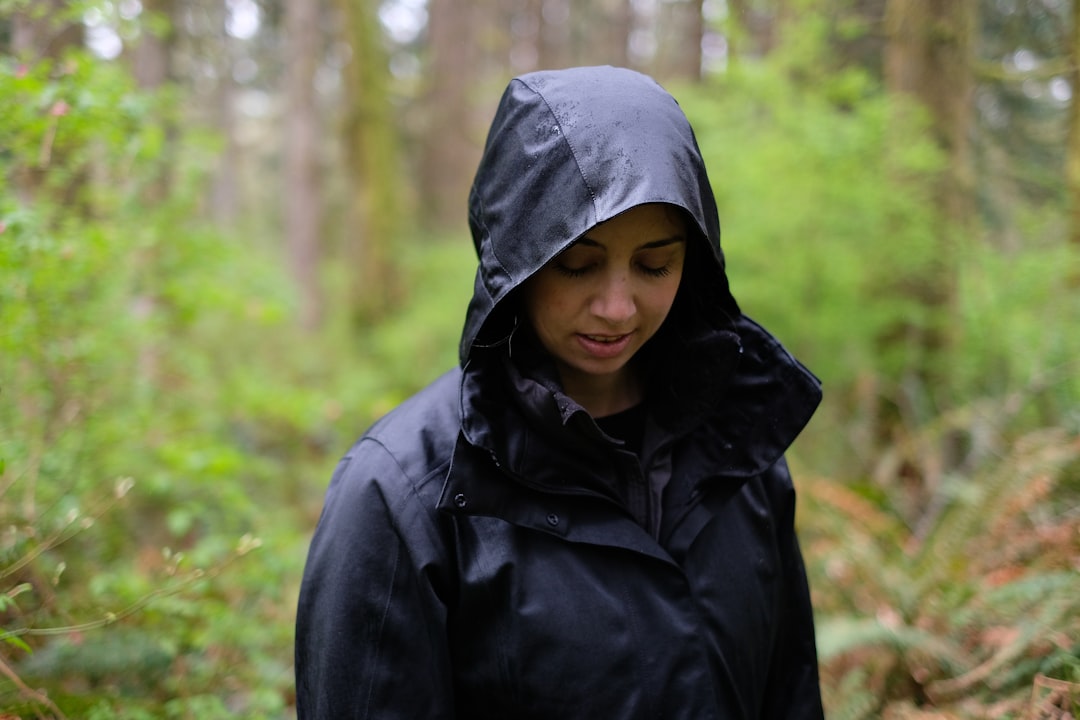 Photo by Steve Gale on Unsplash
The Three Numbers That Matter More Than the Word “Sustainable”
Before the brands, a short vocabulary lesson, because it will save you from buying the wrong coat twice.
Waterproof rating (mm). This measures how much water pressure a fabric can hold before it leaks. A 5,000mm jacket handles light rain and brief walks. A 10,000mm jacket handles steady rain and a commute. Anything 15,000mm and up is meant for hours outdoors, hiking, or cycling in a storm. If a brand doesn’t publish a number, assume it’s low.
Breathability (g/m²/24h or RET). This measures how much water vapor escapes through the fabric in a day. Under 5,000g and you’ll overheat on any walk longer than ten minutes. Between 10,000 and 20,000g is the sweet spot for city wear. Some European brands use RET instead, where a lower number is better: under 6 is excellent, over 12 is basically a plastic bag.
PFC-free. PFCs (per- and polyfluoroalkyl substances) are the fluorinated chemicals that have made rain shells bead water for decades. They’re also persistent, meaning they don’t break down, and they’ve been linked to hormone disruption. PFC-free DWR (durable water repellent) finishes now perform nearly as well, but they need more frequent re-proofing. That’s a maintenance habit, not a dealbreaker, and it’s the same care mindset that keeps a secondhand wool coat going for another decade. If you want the deeper framework on buying less and choosing better, our breakdown of the 7 Rs of sustainable fashion is worth reading before you spend anything.
One more thing: a raincoat is outerwear, which means it lives a harder life than anything else in your closet. Treat the care instructions as part of the purchase price.
Best Overall for Everyday Rain: Patagonia Torrentshell 3L
If you want one coat that handles a commute, a school run, a dog walk, and a weekend hike without thinking about it, this is the benchmark. The Torrentshell 3L is a three-layer shell, meaning the waterproof membrane is bonded to both a face fabric and an inner liner, so it doesn’t rely on a separate mesh lining that soaks through. It’s rated around 20,000mm waterproof and 20,000g breathability, which is more performance than most city wearers will ever need.
It’s PFC-free as of the current DWR formulation, Fair Trade Certified sewn, and backed by Patagonia’s Worn Wear repair program, which matters more than any marketing claim. A raincoat you can get re-zippered in year four is a raincoat you keep for a decade. The fit runs slightly boxy, so size down if you want it to layer under a pack or over a blazer.
Best for: the one-and-done buyer who wants a proven shell and doesn’t want to research again in three years. Watch out for: the crinkle. Three-layer shells sound like a chip bag until they soften up.
[AFFILIATE_LINK_PATAGONIA]
Best for Breathability and Long Walks: Vaude
German outdoor brand Vaude has been quietly ahead on PFC-free chemistry for years, and its rain jackets are built for people who actually move. The breathability numbers sit in the 15,000 to 20,000g range depending on the model, and the cut is more athletic than Patagonia’s, which suits cycling and brisk walking better than standing at a bus stop.
Vaude’s real strength is transparency. It publishes its own chemical management standards and has been phasing out fluorinated DWR across its line rather than in a single hero product. The trade-off is availability: sizing and stock are more limited in North America, and the styling is functional rather than fashion-forward. If you need a coat that reads as “outdoor gear” and not “streetwear,” that’s a feature.
Best for: cyclists, walkers, and anyone who runs warm and hates the clammy-inside feeling. Watch out for: limited US stock and a more technical look.
[AFFILIATE_LINK_VAUDE]
Best for City Style: Girlfriend Collective
Most sustainable raincoats look like they belong on a trail. Girlfriend Collective’s rain pieces look like they belong on a Tuesday. The brand built its reputation on recycled-fiber activewear, and its outerwear follows the same playbook: clean lines, muted colors, inclusive sizing up to 6XL, and a fabric made from recycled plastic bottles.
The performance numbers are more modest than the outdoor brands, which is fine for city rain but not for a mountain. Think 5,000 to 10,000mm waterproofing and breathability that handles a walk to the train, not a four-hour hike. It’s PFC-free, and the fit is genuinely flattering in a way most technical shells aren’t. This is the coat you reach for when you want to look like yourself in the rain.
Best for: commuters, city dwellers, and anyone who wants a raincoat that doesn’t announce itself as gear. Watch out for: lower waterproof ratings. Don’t take it on a serious hike.
[AFFILIATE_LINK_GIRLFRIEND_COLLECTIVE]
 Photo by teleterapia.fi on Unsplash
Best for Minimalist Design: Maium
Amsterdam-based Maium makes raincoats specifically for people on bikes, which means the design solves problems other brands ignore: a longer back hem, reflective details that don’t look like safety gear, and sleeves that don’t ride up when you grip handlebars. The brand uses recycled fabrics and PFC-free finishes, and the silhouettes are genuinely elegant, closer to a trench than a shell.
Waterproofing sits in the mid-range, around 10,000mm, with breathability that’s adequate for active commuting. The coats are lightweight and packable, which makes them good travel pieces. Sizing runs European, so check the chart carefully, and note that the minimalist styling means fewer pockets than you might expect.
Best for: urban cyclists and anyone who wants a raincoat that doubles as a real coat. Watch out for: European sizing and limited colorways.
[AFFILIATE_LINK_MAIUM]
Best for Packability and Travel: Tretorn
Swedish brand Tretorn has been making rubber boots and rainwear since the 1890s, and its modern Wings rain jacket is the packable option: it folds into its own pocket, weighs almost nothing, and handles a travel forecast that turns on you. The rubberized styles are fully waterproof by material rather than by coating, which means no DWR to reapply and no PFCs to worry about at all.
The trade-off with rubber and PU is breathability. These are not coats for a sweaty hike. They’re coats for a rainy city weekend, a festival, or a walk where you’ll be in and out of buildings. The classic yellow and navy colorways have a retro appeal that pairs well with denim, and the care is simple: wipe clean, hang dry, don’t machine wash. That low-maintenance reality is closer to how you’d treat a pair of secondhand suede boots than a technical shell, which is worth knowing before you buy.
Best for: travelers, festival-goers, and anyone who wants zero-maintenance waterproofing. Watch out for: low breathability. You will sweat if you move fast.
[AFFILIATE_LINK_TRETORN]
Best for Budget-Conscious Buyers: Rains
Danish brand Rains makes the raincoat that looks the most like a fashion purchase and costs the least. The signature PU-coated styles are fully waterproof, PFC-free by virtue of being PU rather than fluorinated coating, and available in a wide range of colors and lengths, from short jackets to long belted trenches.
Like Tretorn, the breathability is limited because the material is essentially a coated synthetic. That’s the honest trade-off at this price: you get waterproofing and style, not airflow. The upside is that Rains coats are durable, easy to wipe clean, and genuinely affordable, which makes them a reasonable entry point if you’re testing how often you’ll actually wear a raincoat before investing in a technical shell. If you’re building out a wet-weather capsule, this is the piece that lets you spend more on the coat you’ll wear daily and less on the one you’ll wear occasionally.
Best for: first-time raincoat buyers, students, and anyone who wants style at a lower price. Watch out for: condensation on humid days.
[AFFILIATE_LINK_RAINS]
How the Six Brands Compare
| Brand | Waterproofing | Breathability | PFC-Free | Best Use | Price Tier |
|---|---|---|---|---|---|
| Patagonia Torrentshell 3L | ~20,000mm | ~20,000g | Yes | Everyday + hiking | $$$ |
| Vaude | 15,000–20,000mm | 15,000–20,000g | Yes | Cycling, long walks | $$$ |
| Girlfriend Collective | 5,000–10,000mm | Moderate | Yes | City commuting | $$ |
| Maium | ~10,000mm | Moderate | Yes | Urban cycling | $$$ |
| Tretorn | Fully waterproof (rubber/PU) | Low | Yes | Travel, festivals | $$ |
| Rains | Fully waterproof (PU) | Low | Yes | Style-first, budget | $ |
Read the table left to right as a trade-off, not a ranking. The higher the waterproofing and breathability, the higher the price and the more technical the look. The lower the breathability, the more you’re relying on the coat’s style and convenience to justify it.
How to Choose Your Best Match
Start with the question that actually determines whether you’ll wear the coat: how long are you outside in the rain, and how hard are you moving?
If the answer is “twenty minutes, walking, most rainy days,” you need breathability more than you need a 20,000mm rating, and a mid-range jacket like Girlfriend Collective or Maium will serve you better than a heavy shell you resent wearing. If the answer is “an hour or more, cycling or hiking,” go straight to Patagonia or Vaude and don’t compromise on the numbers. If the answer is “I mostly need it for travel and unpredictable weather,” Tretorn or Rains gives you waterproofing without the maintenance, as long as you accept that you’ll be clammy on a warm day.
Then check two things before you buy. First, does the brand publish its waterproof and breathability numbers? If not, that’s your answer. Second, does it offer repairs or take-back? A raincoat is a high-wear item, and the brands worth your money are the ones that expect you to keep it. That’s the same logic behind our cashmere care checklist: the most sustainable garment is the one you already own and maintain well.
Finally, budget for re-proofing. Even a PFC-free DWR will wear off after a season or two of regular use, and a wash-in or spray-on reproofer costs a fraction of a new coat. If you learn to reapply it, your raincoat can stay waterproof for years, which is the whole point. Buy the coat that fits your actual rainy life, learn to care for it, and you’ll never have to write off a soggy jacket again.