You bought a pair of “sustainable” pyjamas two winters ago. They were soft in a way that felt almost medicinal—the kind of soft you want against your skin after a long day. Then you washed them. And washed them. By the fifteenth wash, the seat had gone sheer, the cuffs had relaxed into sad little bells, and the fabric had pilled into a texture somewhere between a peach and a cat toy. You didn’t wear them out; they wore out on you. That’s the quiet betrayal of sleepwear: it’s the garment you wash most often and inspect least before buying.
The problem isn’t that sustainable pyjama brands don’t exist. It’s that “sustainable” tells you almost nothing about whether a fabric will survive a weekly wash cycle for two years. A TENCEL™ lyocell set from one brand can outlast a cotton-modal blend from another by a factor of three, even when both carry the same certifications and similar price tags. So this roundup groups brands by what actually determines longevity—fabric construction, fit tolerance, and how the seams and elastics are finished—rather than by vague eco-credentials.
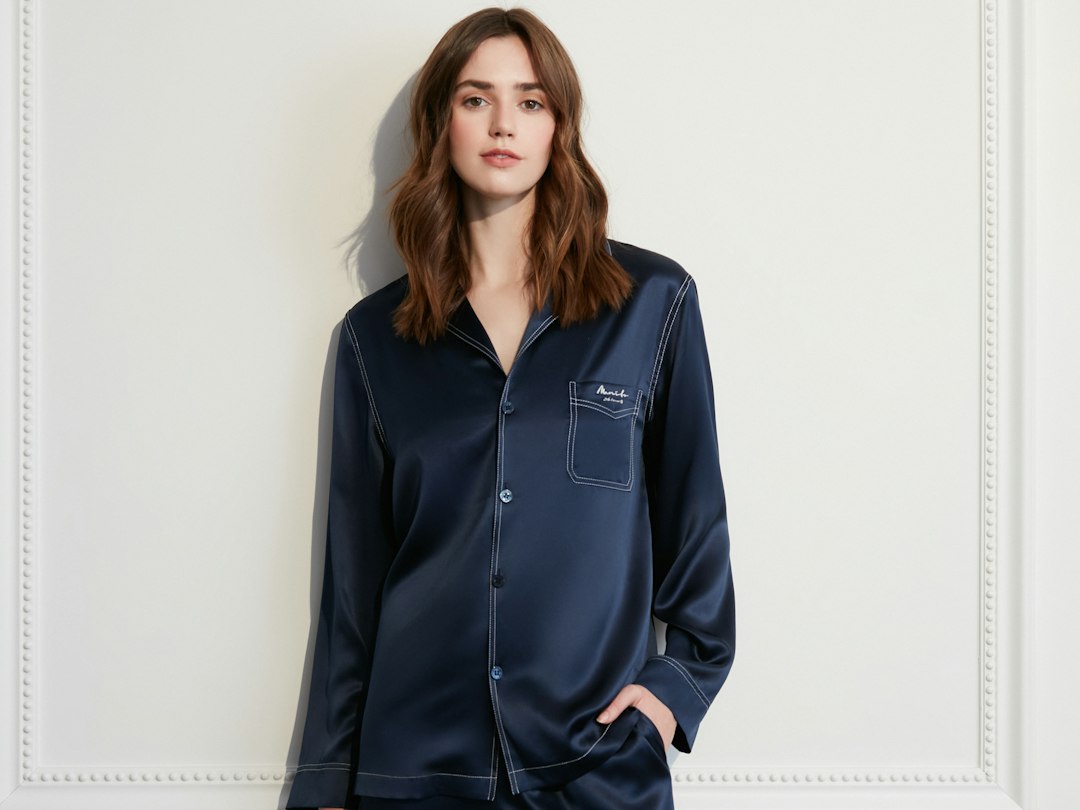 Photo by MANITO SILK on Unsplash
What Actually Kills Pyjamas in the Wash
Before the brands, it helps to know what you’re up against. Most sleepwear failure happens in four places, and each one points to a different fabric or construction choice.
Fibre pill and surface degradation. Short-staple cotton and low-grade viscose shed fibres every wash. Those fibres tangle into pills, and pills make fabric look old long before it structurally is. Long-staple cottons (Supima, Pima, Egyptian) and lyocell—which has a smoother, stronger fibre structure—resist this far better. If you want the deeper chemistry, our explainer on bamboo lyocell vs. cotton and viscose breaks down why semi-synthetics behave so differently in the wash.
Elastic fatigue. Waistbands and cuffs are where pyjamas die first. A covered elastic that’s sewn into a channel will outlast a exposed elastic every time, but even then, the quality of the elastic matters. Cheap rubber-core elastic loses recovery in 30–40 washes; good woven elastic holds for 100+.
Seam and hem failure. French seams and flat-felled seams distribute stress across the fabric rather than concentrating it at a single stitch line. Overlocked (serged) seams on thin fabric are the most common point of blowout, especially at the underarm and crotch.
Fit tolerance. A pyjama set that fits snugly at the hip or shoulder will stress those seams every time you move in your sleep. Sleepwear needs 2–4 cm of ease beyond your body measurements to survive years of washing and movement.
The Brands, Grouped by What They’re Best At
Best for Heavy Rotation and Hot Washes: Organic Basics
If you wash your pyjamas every three or four days and want something that can take a 40°C cycle without flinching, Organic Basics is the most reliable starting point. Their TENCEL™ lyocell and organic cotton sleep sets use flat-felled seams and a covered waistband, and the fabric weight (around 180–200 gsm for the cotton) is dense enough to resist the thinning that kills lighter knits.
The trade-off is fit. Organic Basics runs close to the body, and their sizing is genuinely European—if you’re between sizes, size up, because the ease is minimal. The lyocell sets are the better long-term buy; the cotton ones are softer initially but pill faster after month six. Expect to pay £60–£90 for a set. [AFFILIATE_LINK_ORGANIC_BASICS]
Best for Cold Sleepers and Winter Longevity: Boody
Boody’s bamboo viscose is the outlier here—most bamboo viscose is weak when wet, but Boody’s is a denser knit with a higher yarn twist, which makes it noticeably more durable than the average bamboo pyjama. Their long-sleeve sets are the ones to buy if you sleep cold and want something that survives winter after winter without going thin at the knees.
The catch: bamboo viscose still isn’t as abrasion-resistant as lyocell or long-staple cotton, so if you’re a restless sleeper who tosses and turns, the fabric will show wear at friction points sooner. Wash cold, inside out, and air dry, and you’ll get three or four years out of a set. [AFFILIATE_LINK_BOODY]
Best for Warm Sleepers and Silk Lovers: MANITO Silk
For anyone who sleeps hot or wants the temperature-regulating properties of silk without the fragility of cheap “silk” blends, MANITO Silk is the most durable option in the silk category. Their washable silk pyjamas use a 22-momme charmeuse—heavier than the 16–19 momme most brands use—which means it holds its shape and resists the seam-splitting that plagues lighter silks.
Silk is still silk: it needs cold hand-washing or a delicate machine cycle, and it will never be as bombproof as lyocell. But if you’re willing to treat it well, a MANITO set will outlast three fast-fashion silk sets and look better doing it. If you’re new to silk care, our guide to washing and storing silk slips and scarves applies just as much to silk pyjamas. [AFFILIATE_LINK_MANITO_SILK]
Best for Sensitive Skin and Eczema: Pact
Pact’s organic cotton pyjamas are the ones to buy if your skin reacts to synthetic fibres or if you want a fabric that gets softer with washing rather than rougher. Their interlock cotton is a tighter knit than most, which makes it more pill-resistant than standard jersey, and the waistbands are covered and stitched rather than glued.
Pact runs true to size with generous ease, which is good for longevity but means the fit is relaxed rather than fitted. If you want a pyjama that feels like a second skin, this isn’t it—but if you want one that will still be wearable in 2029 without visible thinning, it’s a strong pick. [AFFILIATE_LINK_PACT]
Best for Minimalist Aesthetics and Layering: Everlane
Everlane’s sleepwear is the most “wearable outside the bedroom” of the group—their cotton-modal blend sets and silk-cotton tanks are cut cleanly enough to wear with a robe or cardigan for a slow morning. The trade-off is durability: the cotton-modal blend is softer than pure cotton but pills faster, and the silk-cotton is lighter than MANITO’s.
Buy Everlane if you want versatile pieces you’ll wear for coffee runs and lazy Sundays, not if you need a set that will survive 200 washes. Their Dreamer cotton sets are the most durable in their range; the modal blends are the ones to avoid if longevity is your priority. [AFFILIATE_LINK_EVERLANE]
Best for Repair and Long-Term Care: People Tree
People Tree’s GOTS-certified organic cotton pyjamas are the most repair-friendly of the group—the seams are simple enough to re-stitch, the fabric is sturdy enough to patch, and the cut is loose enough that a small repair doesn’t distort the fit. If you’re the kind of person who mends rather than replaces, this is your brand.
The fabric is a mid-weight cotton poplin, which means it’s crisp rather than soft initially but softens over time without pilling. The downside is that it wrinkles easily and the fit is boxy. If you want something that feels luxurious out of the bag, look elsewhere. [AFFILIATE_LINK_PEOPLE_TREE]
Comparison Table: Which Brand Fits Your Washing Reality
| Brand | Best Fabric | Wash Temp | Expected Lifespan (weekly wash) | Fit | Price (set) | Best For |
|---|---|---|---|---|---|---|
| Organic Basics | TENCEL™ lyocell | 40°C | 3–5 years | Close | £60–£90 | Heavy rotation, hot washes |
| Boody | Bamboo viscose | 30°C | 3–4 years | Relaxed | £50–£70 | Cold sleepers, winter |
| MANITO Silk | 22-momme silk | Cold hand wash | 5+ years (with care) | True | £180–£250 | Warm sleepers, luxury |
| Pact | Organic interlock cotton | 40°C | 3–4 years | Relaxed | £45–£65 | Sensitive skin |
| Everlane | Cotton-modal / silk-cotton | 30°C | 1.5–3 years | True | £50–£80 | Versatility, layering |
| People Tree | GOTS organic cotton | 40°C | 4–6 years (with repairs) | Boxy | £55–£75 | Repair-first, longevity |
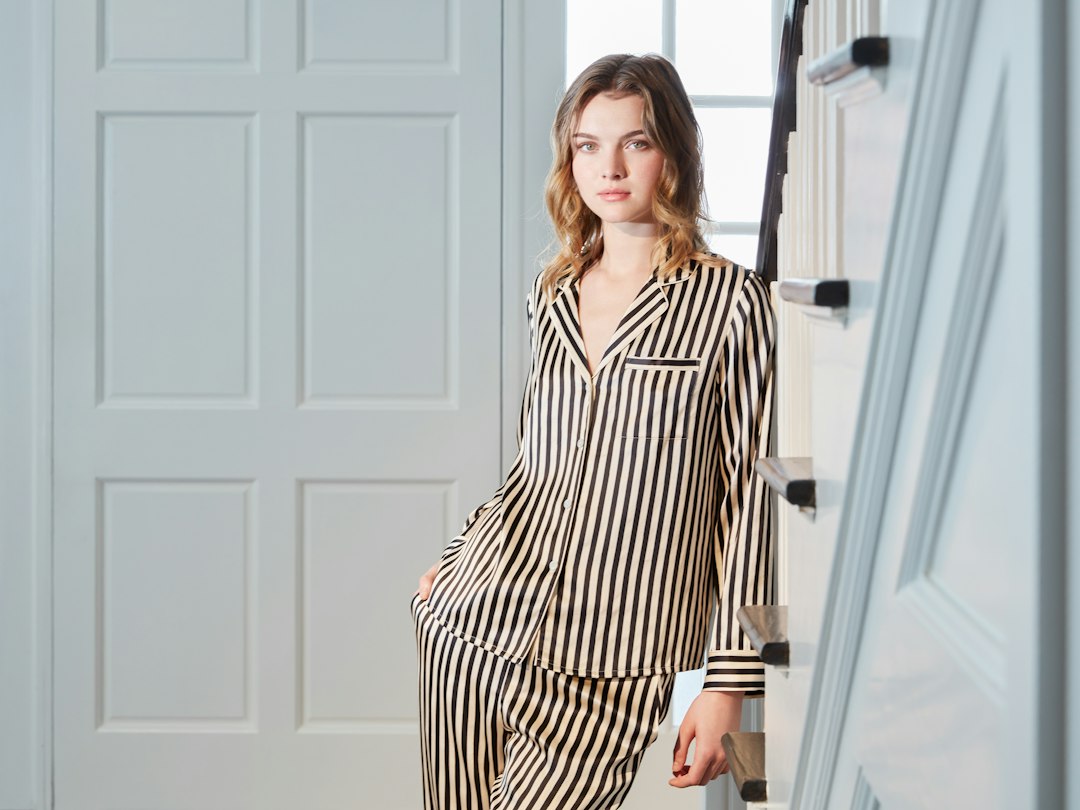 Photo by MANITO SILK on Unsplash
The Washing and Care Habits That Double Pyjama Lifespan
Brand choice gets you halfway. The other half is how you wash. These habits matter more than any certification:
Wash inside out on a gentle cycle at 30°C. Heat is the single biggest accelerator of fibre degradation. A 40°C wash will shorten the life of any pyjama—even the durable ones—by roughly 20% compared to 30°C. If you sleep in them for a week, 30°C is plenty.
Use a mesh laundry bag. This is the cheapest longevity upgrade you can make. A mesh bag prevents the waistband from snagging on zips and buttons in the drum, which is how most elastic channels tear.
Skip fabric softener entirely. Softener coats fibres and reduces their ability to wick moisture, which defeats the purpose of breathable sleepwear. It also builds up over time and makes fabric feel stiffer, not softer.
Air dry flat or on a line. Tumble drying is the second-biggest killer after heat. If you must tumble, use the lowest setting and remove while slightly damp.
Rotate two or three sets. Washing the same set every week means it goes through 52 wash cycles a year. Rotating three sets drops that to 17 cycles each, which roughly triples their lifespan. This is the same logic behind the sock drawer audit—more items in rotation means less wear per item.
Address small repairs immediately. A loose seam or a small hole at the crotch is a five-minute fix that prevents a full blowout. If you already know how to care for secondhand wool coats or suede boots, you have the skills—pyjamas are easier.
How to Choose Your Best Match
Start with your washing reality, not your aesthetic. If you wash weekly at 40°C and want zero fuss, buy Organic Basics or Pact. If you sleep cold and want something that survives winter after winter, buy Boody. If you sleep hot and will actually hand-wash, buy MANITO Silk. If you want versatility and don’t mind replacing sooner, buy Everlane. If you mend and want a set that will last a decade with care, buy People Tree.
Then buy two sets instead of one. The single most effective thing you can do for pyjama longevity isn’t choosing the perfect brand—it’s not washing the same set fifty-two times a year. Two sets in rotation, washed at 30°C in a mesh bag and air-dried, will outlast three sets washed hot and tumbled. That’s the whole formula: buy for the wash cycle you’ll actually run, then give the fabric a chance to rest between wears.