You’ve found the perfect vintage tote. The leather has that lived-in glow, the proportions are ideal, and the price tag is a fraction of what a new bag would cost. You hand over your card, feeling that thrill of the hunt. Then, three months later, a strap snaps during your commute. The lining has disintegrated into a sticky, crumbling mess. The hardware has tarnished to a dull, greenish patina that looks less “vintage charm” and more “abandoned in a damp basement.” The bag isn’t a treasure; it’s a project. And not the fun kind.
Buying a secondhand leather bag is one of the smartest moves for a conscious wardrobe. It keeps leather in circulation, bypasses the environmental cost of new production, and often delivers superior craftsmanship for less money. But the thrill of a good deal can blind you to structural flaws that turn a smart purchase into a costly mistake. This is not a guide on how to spot a “good deal.” This is a guide on how to spot a bag that will still be on your arm a decade from now. Think of it as your pre-purchase inspection, designed to save you from a bag that looks good on the shelf but fails in the real world.
We’re going to walk through a simple, three-part checklist: Leather & Structure, Hardware & Construction, and Lining & Interior. By the end, you’ll know exactly what to check before you commit.
The Leather & Structure Check: Is It Actually Built to Last?
The leather is the soul of the bag. It’s also the most common place where secondhand shoppers get tripped up by surface-level appeal. A bag can look beautiful but be made of bonded leather that will peel within a year. Before you even look at the stitching, you need to assess the material itself.
The Grain Test: Full-Grain vs. Top-Grain vs. Genuine vs. Bonded
This is the single most important distinction. The “grain” refers to the outermost layer of the hide, which is the strongest and most durable part.
- Full-Grain Leather: This is the gold standard. It uses the entire, unaltered top layer of the hide, including all of its natural markings, scars, and grain. It’s the most durable, develops the richest patina over time, and is the most breathable. It’s also the most expensive new, which makes it a fantastic find secondhand. Look for a surface that isn’t perfectly uniform—it should have subtle texture, pores, and possibly small scars or insect bites. This is character, not a defect.
- Top-Grain Leather: The top layer has been sanded and buffed to remove imperfections. It’s still real leather and durable, but it’s slightly less strong than full-grain because the strongest outer layer has been partially removed. It often has a more uniform, almost plastic-like finish. It’s a good, workhorse material, but it won’t develop the same rich patina as full-grain.
- Genuine Leather: This is a marketing term, not a quality grade. It’s typically the lower layers of the hide that have been split and bonded together. It’s less durable, prone to cracking, and won’t develop a patina. It’s fine for a cheap bag, but not an investment piece.
- Bonded Leather: This is not real leather in any meaningful sense. It’s a composite of leather scraps and fibers glued together with polyurethane or latex. It will peel, crack, and disintegrate within a few years. Avoid it entirely. If the bag feels unnaturally smooth, like a plastic sheet, or if the price seems too good to be true, it’s likely bonded.
How to test it: Use your fingernail to gently press into an inconspicuous area, like the bottom or inside a pocket. Full-grain and top-grain leather will have a slight give and will spring back. Bonded or low-quality leather will feel hard, plasticky, or will leave a permanent dent. Also, flex the leather in your hand. Real leather wrinkles naturally; bonded leather cracks.
The Structure Test: Shape, Support, and Sag
A bag’s structure is determined by its internal skeleton. A floppy, unstructured bag is one thing; a bag that has lost its shape due to poor construction is another.
- Check the bottom. Turn the bag over. Does it have a flat, reinforced base? Many quality bags have a separate piece of leather or a stiffener (like a piece of cardboard or a thin sheet of plastic) sewn into the bottom to help it stand up. If the bottom is just a single layer of leather, the bag will eventually sag and develop a permanent crease.
- Check the gussets. These are the side panels that connect the front and back of the bag. They should be securely attached and made of a thick enough material to hold the bag’s shape. Look for gussets that are reinforced with an extra layer of leather or a second seam.
- Check the corners. The corners of the bag are the first place to show wear. Look for signs of cracking, fraying, or excessive creasing. A small amount of wear is normal, but deep cracks indicate the leather is drying out or the construction is weak.
The Patina vs. The Pitfall
A beautiful, even patina is a sign of a well-loved, high-quality leather bag. It’s the result of years of exposure to light, oils, and handling. But not all aging is beautiful.
- Good patina: A rich, warm, slightly uneven coloration that deepens over time. The leather feels supple and soft, but not loose.
- Bad patina: This is actually damage. Look for:
- Dry, cracked leather: The leather has lost its natural oils. It feels brittle and stiff. This can sometimes be revived with a good leather conditioner, but if the cracks are deep, the bag is beyond repair.
- Sun damage: The leather has faded unevenly, often on the top of the bag or the strap. This is permanent.
- Mold or mildew: Look for a musty smell or visible white, green, or black spots. This is a health hazard and a structural issue. Do not buy this bag.
- Water damage: Stains, rings, or a hard, crusty texture. This can sometimes be fixed, but it’s a gamble.
The Shortcut: If the leather feels dry and brittle, or if you see any deep cracks, walk away. You cannot fix structural damage to the leather itself.
The Hardware & Construction Check: The Bag’s Skeleton
A beautiful piece of leather is useless if it’s attached to a cheap zipper or a flimsy strap. Hardware is the bag’s skeleton, and it’s where many secondhand bags fail.
Zippers: The Smooth Operator
The zipper is the most frequently used piece of hardware on a bag. A bad zipper will ruin your day, every day.
- The pull test: Open and close the zipper several times. It should move smoothly and quietly. If it catches, skips, or feels gritty, the teeth are misaligned or the slider is worn out. A zipper that is difficult to close is a major red flag.
- The brand check: Look for a zipper brand. High-quality bags use brands like YKK, RiRi, or Lampo. These are industry standards for a reason. If the zipper is unbranded or has a cheap, tinny feel, the bag is likely lower quality.
- The teeth check: Look at the zipper teeth. Are they metal (brass, nickel, or silver) or plastic? Metal teeth are generally more durable and last longer. Plastic teeth can break, especially if the zipper is under stress. Also, check that the teeth are evenly spaced and not bent or missing.
- The zipper tape: The fabric that the teeth are attached to should be securely sewn into the bag. Look for any fraying or pulling away from the leather.
Clasps, Buckles, and Rings: The Weight Test
- The feel test: Pick up a clasp or a D-ring. Does it feel solid and heavy in your hand, or light and hollow? Quality hardware is made of solid brass, zinc alloy, or stainless steel. It should not feel like painted plastic or thin, stamped metal.
- The finish test: Look at the finish. Is it smooth and even, or are there visible cast lines, bubbles, or rough edges? The finish should be clean and free of imperfections.
- The mechanism test: Open and close any clasps or buckles. They should feel secure and snap into place with a satisfying, solid sound. They should not feel loose, wobbly, or like they might give way.
- The ring test: Look at the rings that attach the strap to the bag. They should be thick and solid, not thin and hollow. A thin ring is a weak point that will eventually bend or snap.
Stitching: The Invisible Support
Stitching is the glue that holds everything together. A bag can have the best leather in the world, but if the stitching is failing, it’s a ticking time bomb.
- The consistency check: Look at the stitching along the seams, the strap attachments, and the bottom of the bag. The stitches should be even, straight, and of a consistent length. They should not be too tight (which can cause the leather to tear) or too loose (which will unravel).
- The knot check: Look for the beginning and end of the stitching, especially on straps and handles. Are the threads back-stitched or knotted securely? Loose ends are a sign of poor craftsmanship and will eventually come undone.
- The thread material: High-quality bags use bonded nylon or polyester thread. These are strong, resistant to rot, and won’t break easily. Cotton thread can rot over time. You can’t always tell the material by looking, but you can look for fraying or broken threads.
- The stress points: Pay special attention to the stitching at the points where the strap meets the bag, the corners of the bag, and the bottom of the bag. These are the areas that bear the most weight and stress. Any signs of fraying, pulling, or broken stitches here is a dealbreaker.
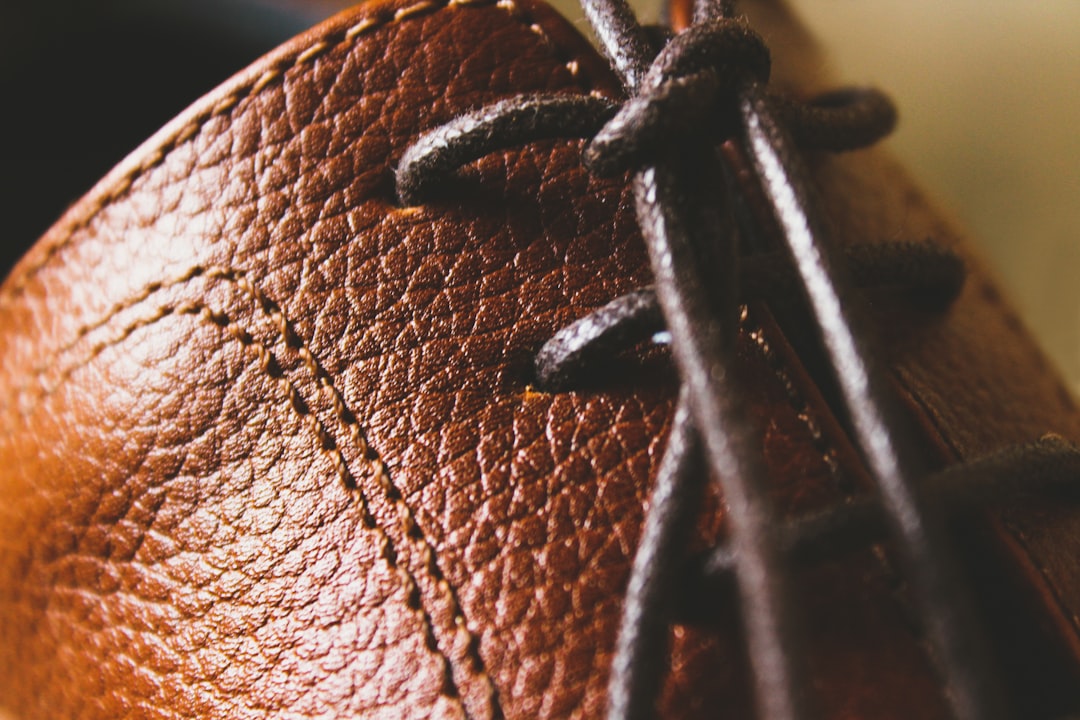 Photo by rupixen on Unsplash
The Lining & Interior Check: The Hidden Decay
The lining is the part of the bag you see the least, but it’s often the first thing to fail. A beautiful exterior can hide a crumbling, sticky, or moldy interior. This is where you need to be most thorough.
The Sticky Situation: The “Plasticizer” Meltdown
This is a very common problem with vintage bags, especially those from the 1990s and early 2000s. Some synthetic linings contain plasticizers that break down over time, turning the lining into a sticky, tacky, or even gooey mess.
- The feel test: Run your fingers along the interior lining. Does it feel smooth and dry, or sticky, tacky, or greasy? If it’s sticky, the plasticizer is breaking down. This is a difficult problem to fix and often requires replacing the entire lining, which is expensive.
- The smell test: Does the bag smell like a new car, or does it have a chemical, plasticky, or musty odor? A strong chemical smell is another sign of plasticizer degradation.
The Material Check: Cotton vs. Polyester vs. The Bad Stuff
- Cotton or Cotton/Polyester Blend: This is the ideal lining material. It’s breathable, durable, and will last for decades if well-maintained. Look for a lining that feels like a sturdy canvas or a soft twill.
- Polyester Satin or Nylon: This is common on mid-range bags. It can be durable, but it’s less breathable and can feel cheap. It’s not a dealbreaker, but it’s not as good as cotton.
- The “Pillowcase” Lining: This is a very thin, flimsy, cheap fabric that feels like a cheap pillowcase. It will tear easily. This is a sign of a low-quality bag.
- Unlined Leather: Some very high-end, vintage bags are unlined. The interior is just the unfinished back of the leather. This is actually excellent for durability, but you need to check that the unfinished leather isn’t cracking or peeling.
The Pocket and Seam Check
- Pocket integrity: Open all interior and exterior pockets. Are the seams intact? Are the zippers (if any) working? Are there any holes or tears? Pockets are stress points, and they often fail first.
- Seam integrity: Run your finger along the interior seams. Are they securely sewn, or are they pulling apart? Look for any loose threads or fraying.
- The divider check: If the bag has a center divider, is it securely attached? Is it made of the same quality material as the rest of the lining?
The Hidden Damage
- Mold and mildew: As mentioned before, look for any signs of mold or mildew inside the bag. This is a health hazard and will ruin the bag. Smell is the best indicator.
- Stains: Look for ink stains, food stains, or water damage. Some stains can be cleaned, but deep-set stains or water damage that has caused the lining to warp or rot is a problem.
- Loose debris: A little bit of dust is normal, but a lot of debris, crumbs, or makeup residue suggests the bag was not well-cared for.
The Shortlist Criteria That Matter
Before you hand over your money, run through this final checklist. If you can answer “yes” to all of these, you’ve found a winner.
| Criterion | What to Check | Pass / Fail |
|---|---|---|
| Leather Quality | Is it full-grain or top-grain? Does it feel supple, not brittle? No deep cracks or peeling? | Pass / Fail |
| Hardware Weight | Do zippers, clasps, and rings feel solid and heavy? Do they open and close smoothly? | Pass / Fail |
| Stitching Integrity | Are the stitches even, straight, and secure at all stress points? No broken or fraying threads? | Pass / Fail |
| Lining Condition | Is the lining dry, not sticky or tacky? Is it made of durable cotton or a blend? No tears or holes? | Pass / Fail |
| Structural Shape | Does the bag stand up on its own? Are the gussets and bottom reinforced? No sagging? | Pass / Fail |
| Overall Odor | Does it smell like leather, not musty, chemical, or moldy? | Pass / Fail |
The Final Word: A secondhand leather bag is a long-term relationship, not a fling. Take your time. Use this checklist. Don’t be afraid to walk away from a bag that doesn’t pass inspection. The perfect bag—the one that will age beautifully with you—is out there. And when you find it, you’ll know.
Your Next Step: Care for Your Find
Once you’ve brought your new bag home, the work isn’t over. Proper care is what turns a good secondhand find into a lifelong staple. Start by conditioning the leather with a high-quality, non-toxic leather conditioner. This will restore its oils and prevent cracking. Learn how to read the care label if there is one—it’s surprising how many people skip this step. For more on that, check out our guide on how to read a garment care label like a pro. And if you’re looking to build a wardrobe around your new investment, our guide on how to build a 10-piece summer capsule shows you how to make every piece work harder. Finally, if you’re on the hunt for other secondhand leather goods, our sister guide on how to spot a quality secondhand leather jacket will help you build a complete, conscious wardrobe.